Benoki Dam — A Symbol of Post-Reversion Renewal
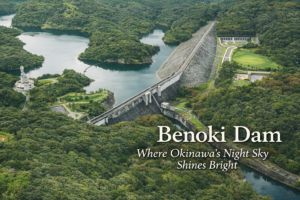
Located about a three-hour drive from Naha Airport, this area sits within the Yanbaru forest of Kunigami Village. Visitors can enjoy a gentle walk around Lake Iju, the calm reservoir created by the dam.
Benoki Dam, built in the 1980s, represents Okinawa’s post-reversion water policy.
But to understand it fully, we must compare it with the period of U.S. administration (1945–1972).
■ During U.S. Administration
After World War II, Okinawa was governed by
United States Civil Administration of the Ryukyu Islands (USCAR).
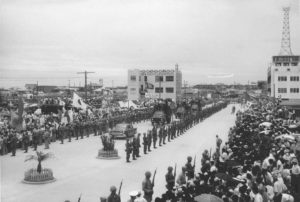
Policies focused mainly on:
Water systems were developed, but priority was often given to areas supporting military and urban needs.
Northern Yanbaru remained relatively undeveloped.
This era can be described as
“Infrastructure for military and urban priorities.”
■ After Reversion to Japan (1972–)
After Okinawa returned to Japan in 1972, infrastructure policy shifted.
The Japanese government began strengthening:
Benoki Dam was part of this new vision.
This marks a transition toward
“Water policy for community life.”
During U.S. administration, infrastructure often supported military and urban priorities.
After Okinawa returned to Japan, the focus shifted toward supporting local communities.
Benoki Dam symbolizes that transition —
from strategic infrastructure to everyday life infrastructure.
Oku River — The bridge between Forest, river, and sea
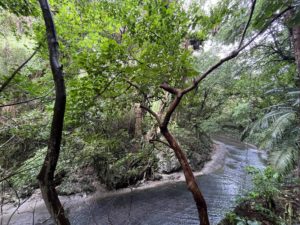
Oku River flows through the mountains of Kunigami in northern Okinawa around 6km length, in the heart of Yanbaru.
This is not just a beautiful stream — it tells the story of how the land was formed and how life has adapted here over millions of years.
1. Mountain Building and the Making of Yanbaru
The Yanbaru mountains were uplifted millions of years ago by movements of the Philippine Sea Plate.
Sediments that were once under the ocean were pushed upward to form today’s forested hills.
The rounded stones and exposed bedrock along Oku River show:
-
Uplift
-
Weathering
-
Heavy rainfall erosion
This river is living evidence that the mountains are still slowly changing.
2. Subtropical Forest and Water Cycle
Yanbaru receives abundant rainfall.
The forest acts like a natural sponge, storing water and releasing it gradually into the river.
This steady flow creates clear water and supports rare species such as:
-
Okinawa Ishikawa’s frog
-
Ryukyu ayu fish
-
Freshwater shrimp
The ecosystem here is delicate and highly adapted to this humid subtropical climate.
3. From Forest to Coral Sea
The water of Oku River eventually reaches the East China Sea.
Healthy forests mean clean rivers — and clean rivers help protect coastal coral reefs.
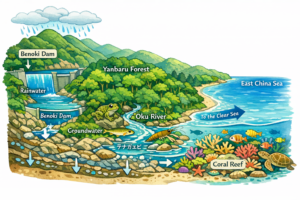
Forest, river, and sea are connected.
Oku River is the bridge between them.
Return
